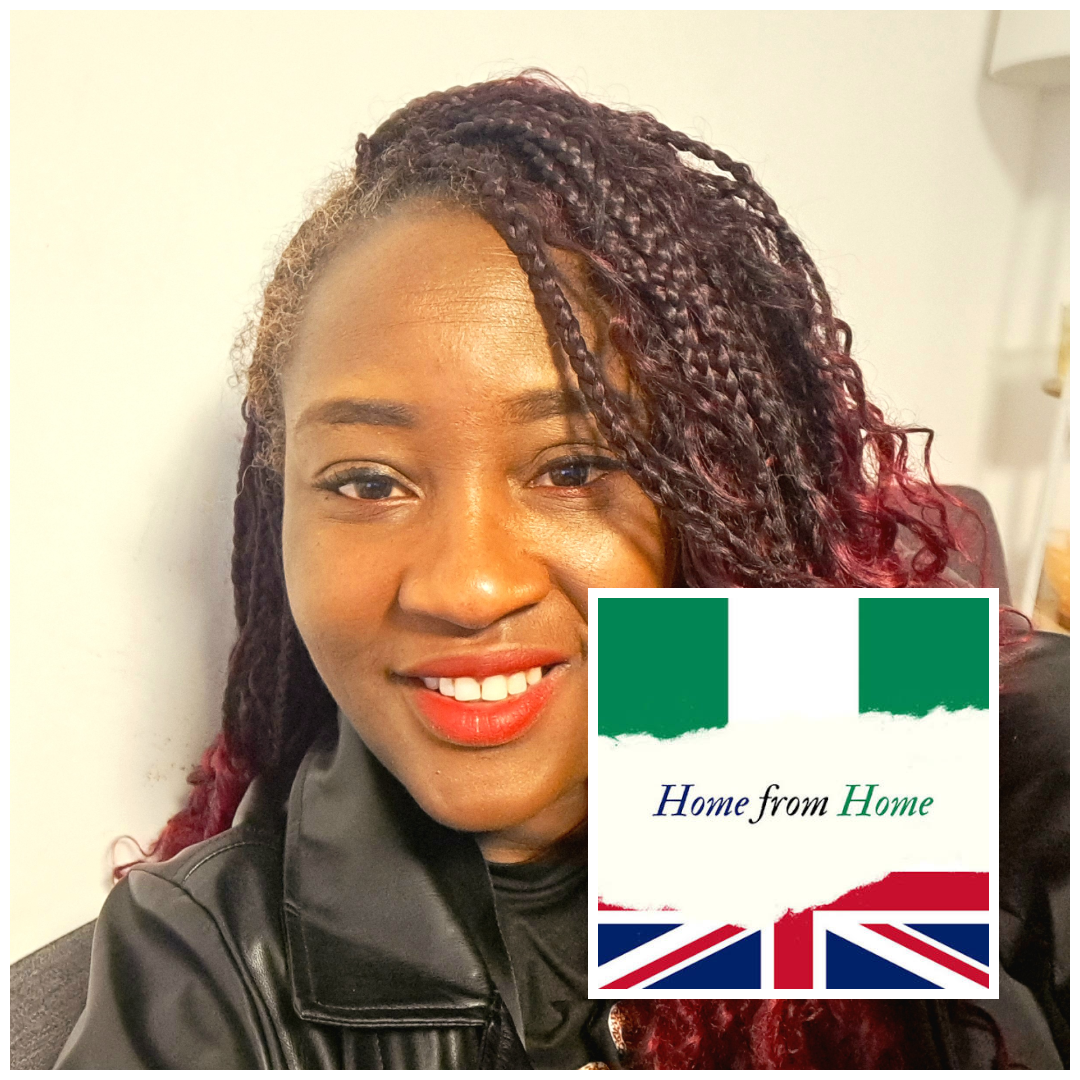
For Dr Nike Folayan, “Home from Home” is about more than belonging. It is about recognising the contributions generations of Nigerians and British Nigerians have made to Britain, and understanding how heritage continues to shape who we are. An engineer, Visiting Professor and co-founder of AFBE-UK, Dr Nike has spent much of her career creating opportunities for others and championing greater representation, leadership and influence in engineering and technology. She is also co-author of What Students Should Know About Africa, exploring Nigerian history, knowledge, science and technological achievement. In this conversation, Dr Nike reflects on being British Nigerian, the role of family, faith, language and community in staying connected to her heritage, and the importance of passing these stories on to future generations. She also shares her hopes for the future: moving beyond representation towards leadership, influence and opportunity, and creating a stronger legacy for those who follow. Her reflections offer a powerful perspective on what it means to find “Home from Home” while understanding where we come from, what we carry forward and how we contribute to the communities we call home.
Your Bio/What do you do?
I’m Nike Folayan. I’m an engineer by profession, a Technical Director at WSP and a Visiting Professor at Queen Mary University of London. I’m also the co-founder and Chair of AFBE-UK, which I started with my brother, Dr Ollie Folayan MBE, almost 20 years ago.
A lot of my professional career has been in engineering and major infrastructure, but alongside that I have always been passionate about people and opportunity. Through AFBE-UK, much of my work has been about creating opportunities for people who might otherwise be overlooked and, importantly, helping people not just to enter engineering but to progress and lead within it.
One of the things I am particularly proud of is AFBELive, our national conference, which brings together industry, professionals, students, entrepreneurs and future leaders. It has grown into a space where we can have bigger conversations about the future of engineering, showcase talent and technology, and create connections and opportunities across generations.
I’m also the co-author, with historian Robin Walker, of What Students Should Know About Africa: Exploring Early and Medieval Nigerian History, Science, and Technology. The book explores Nigerian history, knowledge, science and technological achievement. I’m particularly passionate about younger generations understanding that African history is also a history of knowledge, creativity, science and innovation.
I think that combination of engineering, education, history and community has become a big part of who I am and what I do.
What does “Home From Home” mean to you?
For me, “Home From Home” is about belonging, but it is also about contribution.
Nigeria is very much part of who I am – my values, my family, my faith, my experiences, my outlook and probably quite a lot of my personality! I don’t feel that I need to choose between being British and being Nigerian.
But I also think there is another side to “Home From Home”. Generations of Nigerians haven’t simply come to Britain and made a home here; we have contributed to Britain and helped shape it.
I see that particularly through engineering. There are British Nigerians designing major infrastructure, developing technology, running businesses, teaching in universities and leading organisations. Through AFBE-UK, I have had the privilege of meeting so many of them.
So when I think of “Home From Home”, I think about being proud of where we have come from, but also recognising what we have built here. Our Nigerian heritage isn’t something that has to disappear for us to belong in Britain. It is part of what we bring to Britain.
How do you celebrate your Nigerian heritage?
I’m not sure I consciously think, “Today I am going to celebrate my Nigerian heritage.” It is just part of my everyday life.
It is in the food I eat and cook, the music, family, faith, celebrations and probably many of the things I do without even thinking about them.
I also celebrate it through people. I am incredibly proud when I see Nigerians and people of Nigerian heritage doing well. Through my work, I meet so many brilliant people across engineering, technology, academia and business, and I think it is important that we tell those stories.
Writing What Students Should Know About Africa with Robin Walker was another way of exploring and celebrating that heritage. I think it is really important, particularly for younger people, to know about the history of African knowledge, science, engineering and innovation. If our understanding of African history begins only with slavery and colonialism, we miss an enormous part of the story and of what existed before.
There is something powerful about being able to look backwards and understand where you come from, but also to look ahead and see people who share something of your background doing things you might not previously have imagined were possible for you.
What does being “British Nigerian” mean to you?
I think British Nigerian has increasingly become an identity in its own right.
There are things about me that are unmistakably Nigerian and other things that have been shaped by living in Britain. I don’t see those things as being in conflict.
My Nigerian heritage gave me a very strong sense of family, community, faith, ambition and responsibility to others. Britain has shaped my education, my career and many of the opportunities I have had.
Of course, living between cultures isn’t always straightforward. Sometimes you understand both cultures and sometimes you probably question both! But I think there is something valuable about being able to see the world through more than one cultural lens.
What interests me now is what British Nigerian will mean to the next generation. They won’t experience Nigeria or Britain in exactly the same way that we did, and I don’t think we should expect them to. They will create their own expression of that identity.
How do you stay connected to your identity?
Family is probably the biggest thing, alongside faith, food, friendships and community.
AFBE-UK has also played quite an unexpected role in keeping me connected to my identity. Over nearly 20 years, I have met so many people from across the African diaspora, including a huge number of British Nigerians. There is something quite special about being around people where certain things don’t need explaining.
But I don’t think staying connected means trying to preserve everything exactly as it was for our parents or grandparents. For me, it is knowing where you come from, understanding the things that have shaped you and then being intentional about what you carry forward.
That becomes increasingly important when you start thinking about the next generation and asking: what do I want them to know about where they come from, and what do I want them to carry with them?
I was talking recently to a friend who has enrolled her children in Yoruba lessons, and she admitted that she sometimes eavesdrops on their lessons so that she can learn too! I loved that. Language is such an important part of staying connected to culture and identity, and perhaps our generation is also recognising some of the things we need to reclaim so that we can pass them on.
What does culture mean to you?
Culture is fascinating to me because it is so much deeper than food, clothes, music or the things we can immediately see.
I remember learning that by around the age of six, so much of our understanding of culture, values, belonging and what we consider “normal” is already being formed. That has always fascinated me because it means culture gets into us long before we even have the language to describe it.
Culture is in our values, our stories, how we relate to people, how we raise our children, how we celebrate, how we respond to adversity and even some of the expectations we place on ourselves and others.
That is why I think culture is both an inheritance and a responsibility. We inherit things from the generations before us, sometimes without even realising it. But as adults, we then have choices to make about what we keep, what we question, what we change and what we pass on.
And culture can’t stand still. British Nigerian culture today isn’t identical to the culture our parents brought with them, and our children’s version won’t be identical to ours.
I actually think that is a good thing. Culture should be living. We receive it, we add something to it and then we pass it on.
What do you imagine the future of the British Nigerian Community to look like in the next few years based on your industry?
This is something I feel quite strongly about. For a long time, particularly when we talked about diversity in engineering, the conversation was about representation: how do we get more people of colour into engineering? That is still important, but I think we have to go much further now.
The next question is: where is the influence?
Engineering and technology are changing incredibly quickly. We are talking about AI, clean energy, major infrastructure, advanced manufacturing, quantum technology, net zero and technologies that will fundamentally change how we live.
I want the next generation of British Nigerians not just to see themselves represented in those industries, but to know that they can lead them. They should be starting the companies, developing the technology, creating intellectual property, making investment decisions and sitting at the tables where the future is being shaped.
That thinking is also behind AFBELive. We want to bring people together not simply to talk about diversity, but to expose our community to the industries and technologies shaping the future, connect emerging talent with those already leading, and create a space where relationships, ideas and opportunities can develop. For me, it is about moving the conversation from access and representation towards equity, leadership and influence.
And I think we have a responsibility in that.
Success can’t just be individual. We need to be opening doors, mentoring, investing, sharing networks and creating opportunities for people coming behind us. I would love to see much more of that intergenerational transfer within the British Nigerian community.
For me, that is the future. Not simply being able to point to successful British Nigerians, but building a community where success creates opportunity for the next person and where our contribution has a positive, lasting impact on Britain.
Links to website/Social Media:
AFBE-UK: www.afbe.org.uk/ www.afbelive.com
LinkedIn: Dr Nike Folayan
Book: What Students Should Know About Africa: Exploring Early and Medieval Nigerian History, Science, and Technology – Amazon UK ( https://www.amazon.co.uk/s?k=nike+folayan+and+robin+walker&i=digital-text&crid=THS6G6WO6JT&sprefix=nike+folayan+and+robin+walker%2Cdigital-text%2C134&ref=nb_sb_noss


Add Comment